What this page helps with
A week where meals became irregular, convenience food took over, groceries drifted, or eating started to feel reactive instead of steady.
What it does not do
It does not diagnose an eating disorder, treat diabetes, replace medical nutrition care, or tell you to detox, restrict hard, or erase an entire week with one perfect day.
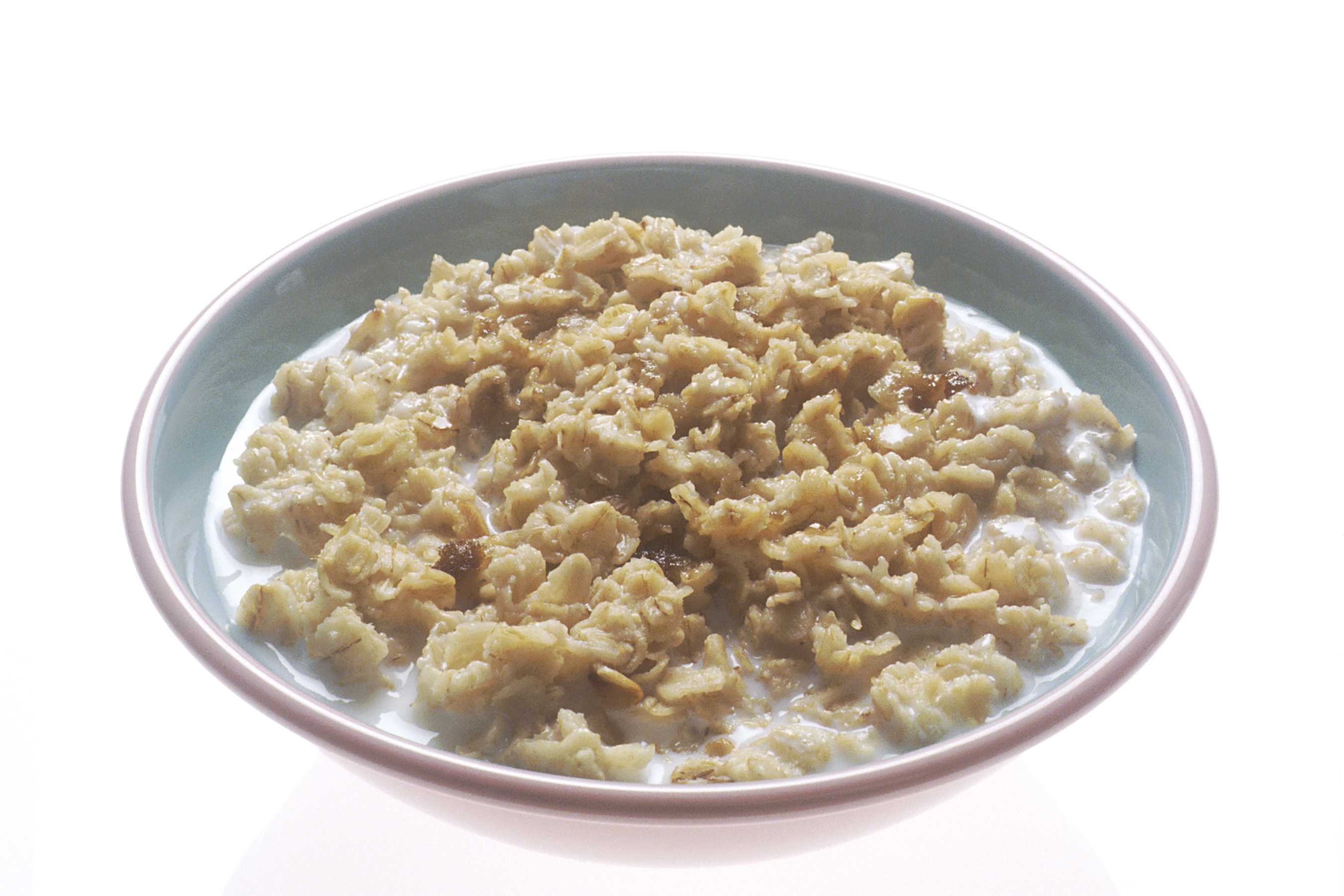
Photo: Oatmeal (1) from the National Cancer Institute by Renee Comet, via Wikimedia Commons. Public-domain image.
.jpg)
Chaotic weeks usually do not break eating routines because you suddenly forgot what vegetables are. They break because decision-making gets expensive. Work runs late. Groceries thin out. Sleep slips. You stop choosing meals and start reacting to whatever is closest, fastest, or easiest to tolerate when you are tired.
That is why the strongest nutrition reset is not motivational. It is operational. The Centers for Disease Control and Prevention says healthy eating is about consistently choosing healthy foods and beverages, and it emphasizes protein, vegetables, fruits, healthy fats, dairy, and whole grains while limiting highly processed foods, added sugars, added sodium, and refined carbohydrates. MedlinePlus also notes that healthy eating does not require a very strict diet or only a few approved foods. A better week starts when the default becomes easier again.
If your week drifted hard enough that sleep and meals both started to unravel, pair this guide with the sleep reset guide and your weekly reset review. Food routines usually hold better when mornings and evenings get less chaotic overall.
What usually makes a chaotic food week worse
Most rough weeks get extended by overcorrection. The common pattern looks like this:
- You feel off after several inconsistent days and decide the next day has to be “clean.”
- You skip meals or try to make up for the week by eating far less than usual.
- You create a long list of food rules that only works on low-stress days.
- You buy an ambitious set of groceries but not the simpler food you will actually use this week.
- You treat one convenience meal as proof that the reset failed.
That loop creates more friction, not more stability. MedlinePlus says healthy eating does not mean following a very strict diet or eating only a few specific foods. It also emphasizes variety, regular healthy foods and beverages, water, and limiting salt, added sugars, alcohol, and saturated fat. In other words: steadier defaults usually help more than dramatic swings.
Reset principle
Rebuild meal regularity first. Fine-tuning quality becomes much easier after the routine stops wobbling.
The first 48 hours: make meals easier, not stricter
If you only change four things in the next two days, make them these:
- Stop trying to erase the week. The next useful meal matters more than your food guilt story.
- Re-establish a meal rhythm. Aim for regular meals instead of long stretches of under-eating followed by whatever is closest at night.
- Buy ordinary, low-friction foods. Think eggs, yogurt, oats, fruit, frozen vegetables, beans, rotisserie chicken, rice, soups, wraps, or another default you actually eat.
- Build one simple plate pattern. CDC and MedlinePlus both point back to the same basics: whole or less-processed foods, fruits or vegetables, protein, and whole grains or another filling staple that makes the meal easier to repeat.
This is also the wrong time to chase perfection with macros, meal prep theater, or a restart so strict that it collapses by Thursday. Your reset has to survive normal life, not impress a version of you who has extra time and energy.
What to keep on hand when your week is already overloaded
A grounded nutrition reset starts with “default food,” not aspirational food. Use a short list of items that reduce decisions:
- Protein anchors: eggs, Greek yogurt, tofu, beans, lentils, canned tuna or salmon, cooked chicken.
- Quick produce: bananas, apples, berries, bagged greens, baby carrots, frozen vegetables.
- Steady starches: oats, brown rice, whole-grain bread, wraps, potatoes, quinoa, or another staple you regularly finish.
- Simple fats: nuts, seeds, peanut butter, olive oil, avocado when practical.
- Backup meals: soup plus bread, yogurt plus fruit plus oats, eggs plus toast plus fruit, rice plus beans plus frozen vegetables.
Notice what is missing: moral categories. “Good food” and “bad food” rules are weaker than “food that keeps the routine alive” and “food that makes the routine harder to repeat.” Your system needs default combinations you can assemble when your week is still messy.
Use one calmer meal formula instead of a full meal plan
For the next week, use one repeatable formula rather than designing seven perfect days. A simple version looks like this:
| Situation | Lowest-friction meal pattern | What to avoid |
|---|---|---|
| Mornings feel rushed | Use one breakfast default you can make half-asleep: oatmeal and fruit, yogurt and oats, eggs and toast, or another simple repeat. | Skipping breakfast only to overreact later if that pattern repeatedly leaves you overly hungry and impulsive. |
| Lunch keeps disappearing | Pair one protein, one produce item, and one starch you can pack or assemble fast. | Waiting too long and turning lunch into random snacking plus caffeine. |
| Dinner becomes takeout by default | Keep two fallback dinners that are faster than deciding: soup and bread, rice and beans, pasta and vegetables, eggs and potatoes. | Treating convenience as failure instead of choosing the simplest acceptable version. |
| You feel pulled toward a hard reset | Return to regular meals, steady fluids, simpler grocery rules, and one weekly review. | Cleanses, aggressive restriction, or “starting Monday” plans that depend on a perfect week. |
What not to overcomplicate
Nutrition advice often gets less useful when life gets harder. Keep these pieces small:
1. Do not turn the reset into a purity project
Healthy eating patterns matter. Food perfection does not. MedlinePlus explicitly says healthy eating does not require a very strict diet and does not mean you can never eat favorite foods. The better target is a steadier base pattern, not zero flexibility.
2. Do not chase a “detox week”
A chaotic week usually calls for regular meals, water, and simpler choices, not a liquid reset. The stronger public-health guidance is still built around regular food, nutrient-dense choices, and limiting heavily processed inputs, not trying to “undo” a week with an extreme plan.
3. Keep tracking smaller than the eating routine
If you track anything, keep it basic: Did I eat regular meals? Did I have produce today? Did I rely on defaults instead of improvising everything? If you need a bigger check-in, use the same simple system as the weekly reset review instead of building a spreadsheet that becomes another source of friction.
What evidence is strong, and what stays mixed
Stronger, lower-risk guidance: returning to regular meals, using a variety of minimally processed foods, keeping fruits, vegetables, protein, and whole grains in the weekly pattern, limiting highly processed foods, and lowering added sugars and sodium when possible. That direction is consistent across CDC and MedlinePlus guidance.
More mixed or context-dependent: social-media detox plans, “cheat day” framing, product-heavy resets, and any plan that assumes everyone needs the same macro split or meal timing. Those can work for some people, but they are not the clearest general default after a chaotic week.
Important distinction: a disrupted food routine is not automatically an eating disorder, but it should not be brushed off if food rules, guilt, bingeing, purging, or obsession are taking over. NIMH says eating disorders are serious illnesses marked by severe disturbances in eating behavior, and early detection and treatment matter.
When habit guidance stops being enough
Move beyond self-management earlier if any of these apply:
- Your “reset” keeps turning into severe restriction, bingeing, purging, or obsessive control.
- Food, weight, or body-shape concerns are taking over your thinking or daily functioning.
- You have a medical condition, prescribed eating plan, or nutrition-related symptom pattern that makes generic advice too blunt.
- You are repeatedly avoiding meals, feeling unable to eat normally, or using shame to drive the routine.
Care boundary
This site offers general education for routine repair. It does not diagnose or treat eating disorders, diabetes, gastrointestinal conditions, or another medical problem. If eating behavior feels compulsive, fear-based, or medically constrained, use a licensed clinician or registered dietitian instead of trying to solve it with a tighter self-imposed reset.
A 10-minute weekly food reset that fits real life
Once the week calms down, do a short review instead of promising yourself a whole new identity:
- What made meals harder this week: low groceries, poor sleep, late work, travel, low energy, decision fatigue?
- Which meals failed first: breakfast, lunch, dinner, or snacks?
- What food default helped at least once?
- What should get simpler next week: grocery list, meal count, prep expectations, or portion of convenience meals?
- What one default should be visible and ready first?
If your routine also needs movement support, use the same low-friction logic from the 30-minute movement habit guide. The point is not to compensate for food with exercise. The point is to rebuild a week where basic routines support each other instead of collapsing together.
Eating reset FAQ
Should I cut way back after a week of takeout or snacks?
Usually not. Aggressive restriction often creates more instability. A steadier return to regular meals and simpler defaults is more repeatable than trying to “erase” the week.
Do I need a meal-prep system to reset my eating routine?
No. A reset can be much smaller than that. A short grocery list, two fallback meals, and one breakfast default may do more for consistency than a full prep routine you cannot keep.
When should I think beyond habit advice?
When food guilt, bingeing, purging, restrictive behavior, or body/weight obsession starts to dominate the routine, or when a medical condition makes general nutrition guidance too generic to be safe.